拦截器问题
情景介绍
当在 remote 项目中调用 http 请求的时候,并没有走 host 项目的拦截器,而还是走的 remote 项目自己的拦截器
搭建 Demo
分别在 host 和 remote 项目中创建一个拦截器
ng g interceptor interceptor/req-res --project host
ng g interceptor interceptor/req-res --project remote
打上各自的 log
req-res.interceptor.tsintercept(
request: HttpRequest<unknown>,
next: HttpHandler
): Observable<HttpEvent<unknown>> {
console.log('<host/remote> request');
return next.handle(request).pipe(
map((event) => {
if (!(event instanceof HttpResponse)) return event;
console.log('<host/remote> response');
return event;
})
);
}app.module.tsconst httpInterceptorProviders = [
{ provide: HTTP_INTERCEPTORS, useClass: ReqResInterceptor, multi: true },
]
providers: [
httpInterceptorProviders
],在两个项目中分别调用 http 请求,服务端就用 express 随意搭建一个就行(如果碰到跨域,在 host 项目中添加一个 proxy.conf.json 进行代理)
为了演示,我多打了几个 log,可以看出,当我们点击 host send http request 时,走的是 host 的拦截器,当点击 remote send http request 时,走的是 remote 自己的拦截器
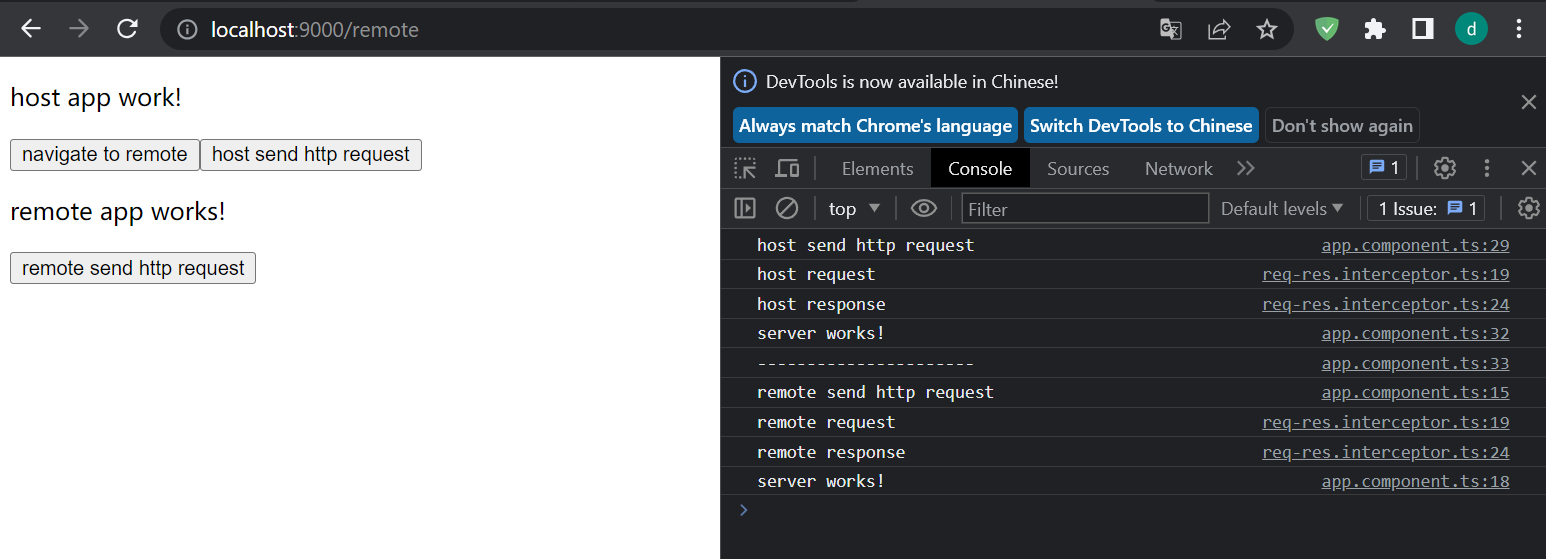
至此,我们 Demo 搭建成功,接下来就是分析问题了
分析问题
我们先注释掉 remote 项目中的拦截器
providers: [
// httpInterceptorProviders
],
再来看,调用接口时走的拦截器变化
当我们点击 remote send http request 时,走的就是 remote 自己的拦截器
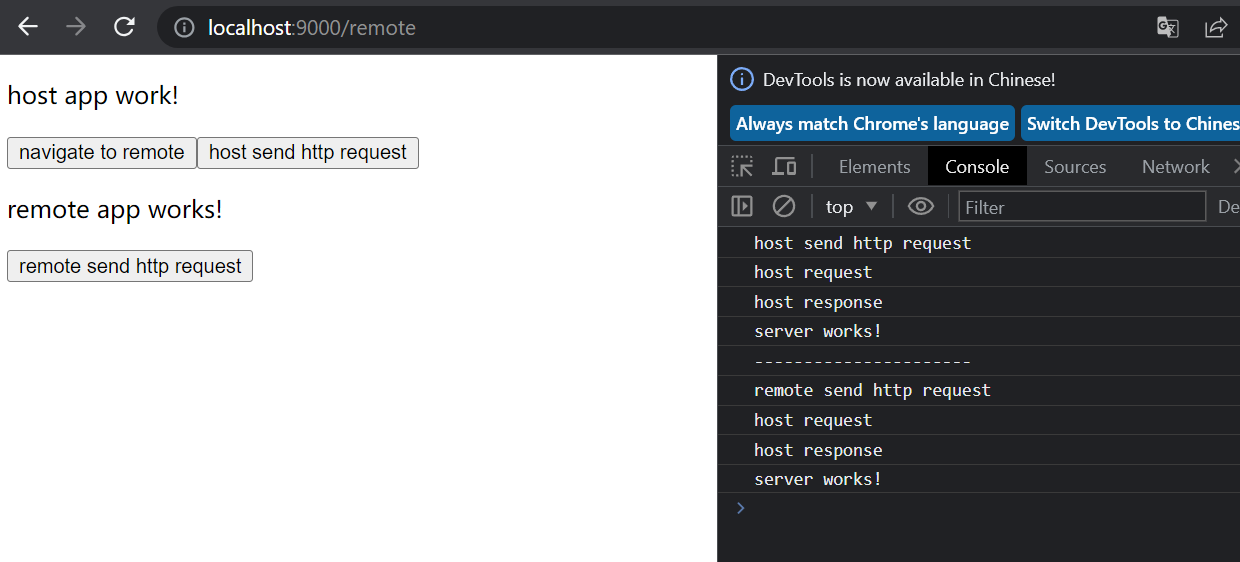
现在,我们可以得出结论了,remote 并不是没有走 host 项目的拦截器,而是和 Angular 的 service 的特性一样,里面拦截器的把外面的覆盖了
解决方案
把注释的拦截器解开
获取 remote 项目的拦截器
回到我们上两节讲的 loadRemoteRootModule 方法上面,appModuleProviders 就是 remote 项目 AppModule 所有的 providers
const loadRemoteRootModule = (module: any) =>  {
  const appModuleProviders = module.AppModule.ɵinj.providers
  ......
  return module.AppModule;
};
将 host 项目的 httpInterceptorProviders 插入到 appModuleProviders 里面
为了代码的健壮性,我在 host 项目 interceptor 文件夹下面建了个 index.ts,专门用来导出所有的拦截器,然后再更新 AppModule 中 httpInterceptorProviders 的导入
import { HTTP_INTERCEPTORS } from "@angular/common/http";
import { ReqResInterceptor } from "./req-res.interceptor";

export const httpInterceptorProviders = [
  { provide: HTTP_INTERCEPTORS, useClass: ReqResInterceptor, multi: true },
];
const loadRemoteRootModule = (module: any) =>  {
  const appModuleProviders = module.AppModule.ɵinj.providers
  appModuleProviders.unshift(httpInterceptorProviders)
  ......
  return module.AppModule;
};
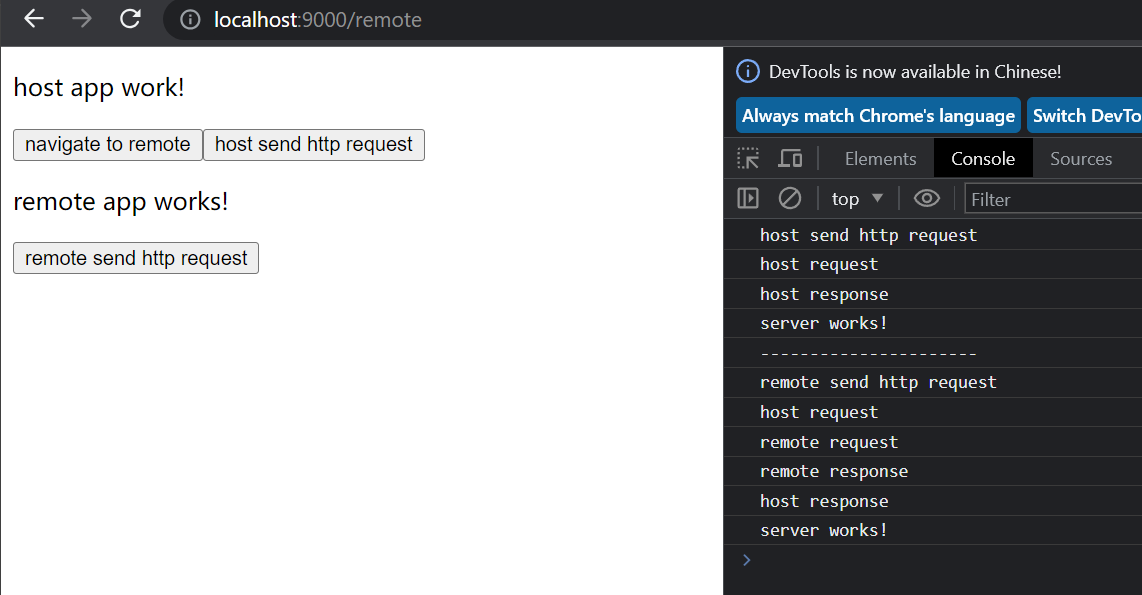
试验解决方案
从图中可以看出,点击 remote send http request 时,先走的 host 的拦截器,然后走的 remote 拦截器
小贴士
当然,这只是一种实际情况
如果实际项目中不想走 remote 的拦截器,那就直接删除 appModuleProviders 中的拦截器配置
如果只想走 host 的拦截器,也可以直接替换,以上只是一种解题思路,实际项目中可以灵活变通